Aluminum container lead time depends on design finality, tooling, material sourcing, and finishing. Procurement costs rise with complex shapes, tight tolerances, and special finishes. A clear RFQ with full specifications reduces quote variance and speeds up production.
- Aluminum container lead time shortens when designs are finalized and materials are in stock.
- Procurement costs increase with complex geometry, custom tooling, and special surface finishes.
- A detailed RFQ reduces quote variance and helps buyers compare suppliers fairly.
- Tooling, finishing, and logistics are major cost levers beyond raw material price.
- Standardizing specs and allowing buffer time reduces delivery risk.
What drives aluminum container lead time
Aluminum container lead time is the span from a confirmed purchase order to delivery at your facility. It is not a single number. It changes with design complexity, tooling status, material availability, and finishing requirements.
A simple can with a standard lid and a basic print can move quickly. A shaped container with a custom shoulder, a specific neck finish, and a multi-color print takes longer. The first factor is design readiness. Suppliers need frozen CAD files, print proofs, and finish samples. If a buyer sends a rough sketch, the supplier must interpret dimensions, wall thickness, and tolerances. That interpretation creates rework.
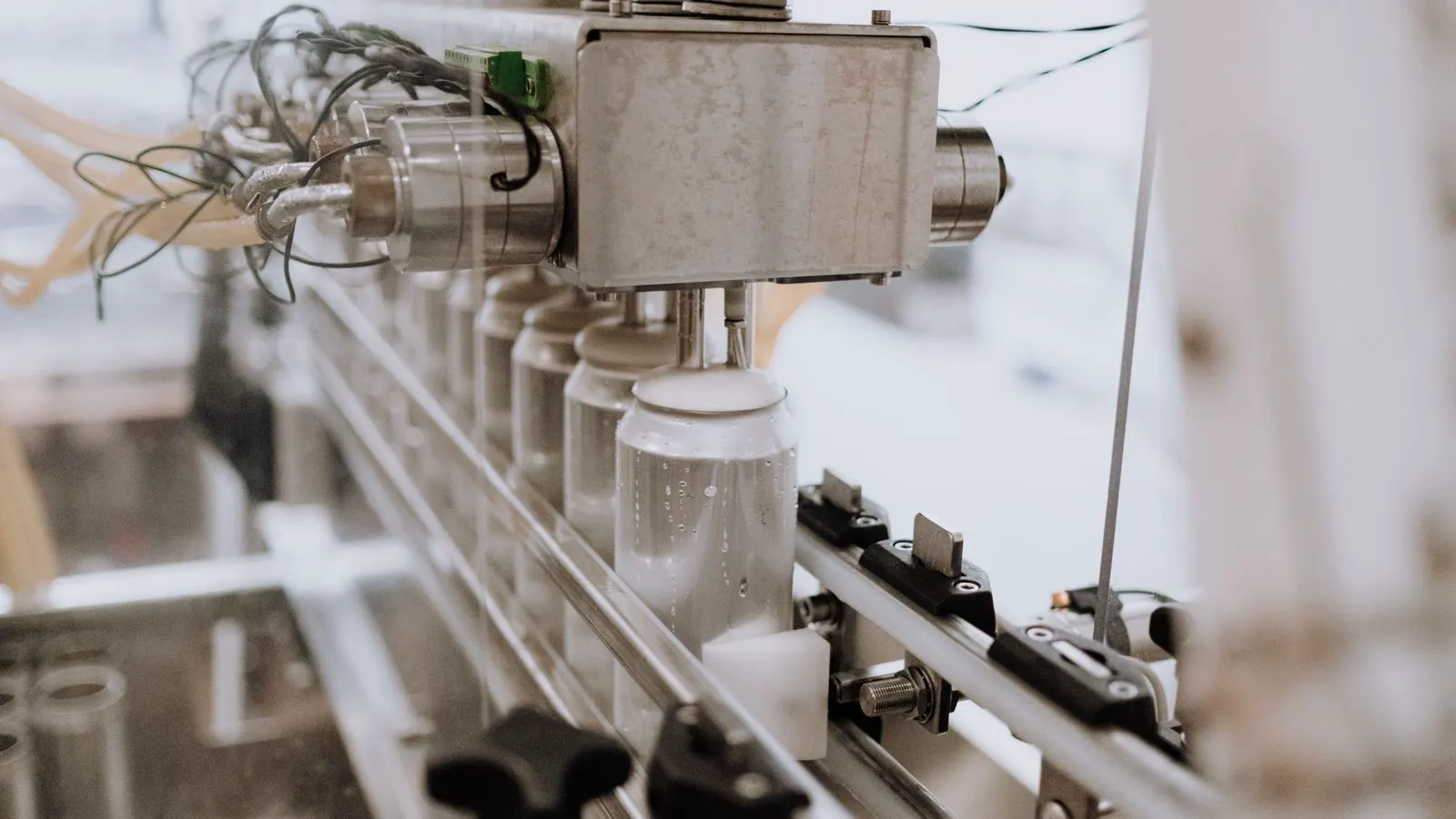
Tooling is the second major factor. Most aluminum containers are formed by spinning, drawing, or stamping. Each method uses a specific die or tool. If the supplier already has a tool for your shape, production starts fast. If not, the tool must be designed, machined, and tested. Tool development takes weeks. It also requires trial runs to confirm that the blank does not crack and that the lid seals correctly.
Material availability is the third factor. Aluminum coil is a commodity, but specific alloys, tempering, and coating levels are not always on hand. A supplier may need to order a specific grade if your application requires a particular corrosion resistance or formability. If the coil is delayed, the whole line waits.
Finishing adds time. Printing, embossing, and lid assembly are sequential steps. A supplier cannot print a can before it is formed and cleaned. Each step has a queue. If one step is delayed, the rest of the line absorbs the delay.
Finally, logistics determine the final date. A container shipped by sea has a long transit time. A container shipped by road or rail has a shorter transit time but a higher per-unit cost. The buyer must decide how much buffer time the supply chain needs.
How procurement costs are structured
Procurement costs for custom packaging are not just the price of the finished can. They include material, labor, tooling, finishing, quality checks, and logistics.
Material is the base cost. The price depends on the aluminum grade, the thickness of the sheet or coil, and the quantity. A larger order lowers the cost per unit. A small order pays a premium. The supplier adds a margin to cover the raw material purchase.
Tooling is a one-time or semi-recurring cost. A new spinning die may cost more than a stamping die. The cost varies with the complexity of the shape. A simple cylinder is cheap to tool. A bottle with a complex shoulder and a narrow neck is expensive to tool. Tooling costs are often amortized over a production run. If a buyer orders a small quantity, the tooling cost per unit is high. If the buyer orders in volume, the tooling cost per unit is low.
Finishing is the next cost block. Printing methods range from simple single-color to multi-color. Each color adds a screen or a plate. Embossing adds a die. A custom lid adds a separate forming process. The more steps, the higher the cost.
Quality checks add cost. A supplier tests for seam strength, lid seal, and print registration. The more checks, the longer the test time. The longer the test time, the higher the labor cost. A buyer who requires extensive testing pays more than a buyer who relies on standard checks.
Logistics add cost. Packaging for aluminum containers must protect them from denting and moisture. The packaging material, the pallet configuration, and the shipping method all affect the final price. A buyer in a remote location pays more for delivery than a buyer near the factory.
How to write a clear RFQ
A clear RFQ reduces quote variance. It gives the supplier enough information to price the job without guessing.
Start with the product description. State the container type, the capacity, and the intended use. A 355 ml beverage can is different from a 500 ml food can. The use determines the required pressure rating, the required corrosion resistance, and the required shelf life.
Next, provide the dimensions. Give the overall height, the diameter, the shoulder angle, and the neck finish. If you have a CAD file, attach it. If you have a 2D drawing, attach it. If you only have a sketch, state that clearly. A sketch is a starting point, not a final spec.
State the material requirements. Specify the aluminum alloy, the gauge, and the coating type. If you have no preference, say so. If you have a mandatory spec, state it clearly. A supplier can suggest alternatives, but the buyer must decide.
Define the finishing requirements. State the print method, the number of colors, and the placement. State the lid type and the lid finish. State the label type, if any. A can with a full print is different from a can with a partial print.
State the quantity and the delivery date. The quantity determines the tooling cost. The delivery date determines the production schedule. If the delivery date is tight, the supplier may charge a premium for expedited tooling or expedited shipping.
Finally, state the compliance requirements. State any food safety standards, any export requirements, and any labeling rules. A supplier in one region may not be able to meet the requirements of another region. Stating the requirements upfront avoids rework.
How to compare quotes fairly
Suppliers quote differently. Some include tooling, some exclude it. Some include shipping, some exclude it. Some include quality checks, some do not. To compare quotes fairly, normalize them.
Create a comparison table. List each supplier, the quoted unit price, the tooling cost, the finishing cost, the shipping cost, and the total cost. Then add a column for the delivery date. A cheap quote with a long lead time may not be cheaper than a dear quote with a short lead time.
Look at the assumptions. A supplier may assume a standard lid. Another supplier may assume a custom lid. A supplier may assume a standard print. Another supplier may assume a custom print. Read the notes carefully.
Look at the minimum order quantity. A supplier may quote a low price for a large order and a high price for a small order. If your order is below the minimum, the price may change.
Look at the sample cost. Some suppliers charge for samples. Some do not. A sample is a small test run. It costs money. If you need multiple samples, the cost adds up.
Look at the payment terms. A supplier may require a deposit. The deposit size affects your cash flow. A large deposit is a risk. A small deposit is a lower risk.
What to do when the lead time is too long
If the aluminum container lead time is longer than you need, you have a few options. You can ask the supplier to expedite the job. You can ask the supplier to use existing tooling if available. You can ask the supplier to use stock material if available. You can split the order into two batches. You can source from a second supplier.
Expediting costs more. A supplier may charge a premium for expedited tooling or expedited shipping. The premium is not always worth it. If the product is in high demand, the premium may be justified. If the product is in low demand, the premium may not be justified.
Using existing tooling saves time. If the supplier already has a tool for your shape, you can skip the tooling phase. The trade-off is that your container may not be exactly what you want. It may be close, but not exact.
Using stock material saves time. If the supplier has the specific alloy in stock, you can skip the material purchase phase. The trade-off is that you may not get the exact grade you want. You may get a close grade, but not the exact grade.
Splitting the order into two batches allows you to get some product early. You can start selling the first batch while you wait for the second batch. The trade-off is that the second batch may cost more because it is a smaller order.
Sourcing from a second supplier adds risk. You have to qualify the new supplier. You have to run samples. You have to set up the new tooling. The trade-off is that you may get a shorter lead time if the second supplier has capacity.
Common mistakes in custom packaging procurement
The most common mistake is sending a vague RFQ. A vague RFQ leads to a vague quote. A vague quote leads to a surprise invoice. The buyer thinks the price is one thing. The invoice says something else.
The second mistake is changing the design late. If you change the shape, the tooling must be redone. If you change the print, the screens must be redone. If you change the lid, the lid tooling must be redone. Late changes are expensive.
The third mistake is ignoring the minimum order quantity. A supplier may quote a low price for a large order. If you order a small quantity, the price may be higher. The buyer must plan for the minimum quantity.
The fourth mistake is not testing the product. A sample is not a guarantee. A sample may pass the test, but the production run may fail. The buyer must test a production run, not just a sample.
The fifth mistake is not building in buffer time. A supplier may promise a delivery date. The delivery date may slip. The buyer must build in buffer time. A buffer of two to four weeks is common. A buffer of six to eight weeks is safer.
How to plan for cost and delivery
Plan for cost and delivery by understanding the variables. The variables are design complexity, tooling, material, finishing, quality checks, and logistics.
Design complexity affects tooling cost and production time. A simple design is cheap and fast. A complex design is expensive and slow.
Tooling affects the total cost. A new tool is a capital expense. A used tool is a lower expense. A tool from another supplier is a risk.
Material affects the base cost. A standard alloy is cheap. A specialty alloy is expensive. A stock material is fast. A custom material is slow.
Finishing affects the cost per unit. A simple print is cheap. A complex print is expensive. A custom lid is expensive.
Quality checks affect the labor cost. A standard check is cheap. A custom check is expensive. A long check is slow.
Logistics affect the final cost. A short distance is cheap. A long distance is expensive. A fast method is expensive. A slow method is cheap.
By understanding these variables, a buyer can plan for cost and delivery. The buyer can choose the right balance. The buyer can avoid surprises. The buyer can deliver on time.
Frequently asked questions
How long does aluminum container lead time usually take?
It depends on tooling and design. A standard can with existing tooling can be fast. A custom shape with new tooling takes weeks.
What is the biggest cost driver in custom packaging?
Tooling is often the biggest driver. A new die or stamping tool can cost more than the raw material.
Can I reduce aluminum container lead time?
Yes. Finalize the design early. Use existing tooling. Use stock material. Build in buffer time.
How do I compare supplier quotes?
Normalize the quotes. Include tooling, finishing, and shipping. Compare the delivery date, not just the price.
What is a good buffer time for custom packaging?
Two to four weeks is common. Six to eight weeks is safer for complex designs or tight schedules.