Container lead time variability changes by region due to distinct logistics networks, production cycles, and supply chain structures. Understanding regional logistics and production delays helps buyers plan inventory and negotiate delivery terms. This guide explains how sourcing location shapes schedule reliability.
- Regional logistics infrastructure shapes how quickly containers move from factory to buyer.
- Production delays often stem from material supply issues or equipment maintenance, not just factory speed.
- Sourcing from multiple regions can reduce single-point failure risk in delivery schedules.
- Clear communication about regional constraints improves forecast accuracy and negotiation outcomes.
Why Lead Time Variability Differs by Region
Lead time variability measures how much actual delivery dates shift from the promised date. In container manufacturing, this variance is not random noise. It reflects structural differences in how factories operate, how materials move, and how logistics networks handle demand. A buyer in one region may see consistent weekly deliveries, while a buyer in another sees three-week swings. The difference usually lies in the supply chain architecture behind the product.
Regional logistics networks vary widely. Some areas have dense port access, short trucking routes, and established warehousing. Others depend on long-distance freight, seasonal weather patterns, or limited rail connections. These factors change how predictable a delivery schedule can be.
Production delays also follow regional patterns. Factories in certain areas may share glass furnaces, melt tanks, or packaging lines. If one shared resource fails, multiple manufacturers feel the shock. Buyers need to see how a supplier manages these shared dependencies.
What Regional Logistics Actually Means
Regional logistics refers to the physical movement of containers from production to the buyer. It covers raw material intake, finished goods storage, trucking, rail, ocean freight, and last-mile delivery. Each link adds time and risk.
Consider a glass bottle supplier near a major port. Finished containers can move to a warehouse the same day. From there, trucking to the customer may take one to three days. The whole chain stays tight.
Now consider a supplier in a landlocked area. Finished goods may sit in a local yard for days. Rail transport to a port can take a week or more. Ocean freight adds another layer of uncertainty. The final mile may involve multiple handoffs. Each handoff creates a window where delays can enter.
Buyers often underestimate the logistics layer. The factory may be excellent. The furnace may be new. But if the trucking network is unreliable in winter or the rail yard is congested, the delivery date slips.
How Production Delays Create Variability
Production delays are the other major driver of lead time variability. They occur when the factory cannot maintain its planned output. Common causes include glass batch quality issues, furnace maintenance, mold changes, and labor shortages.
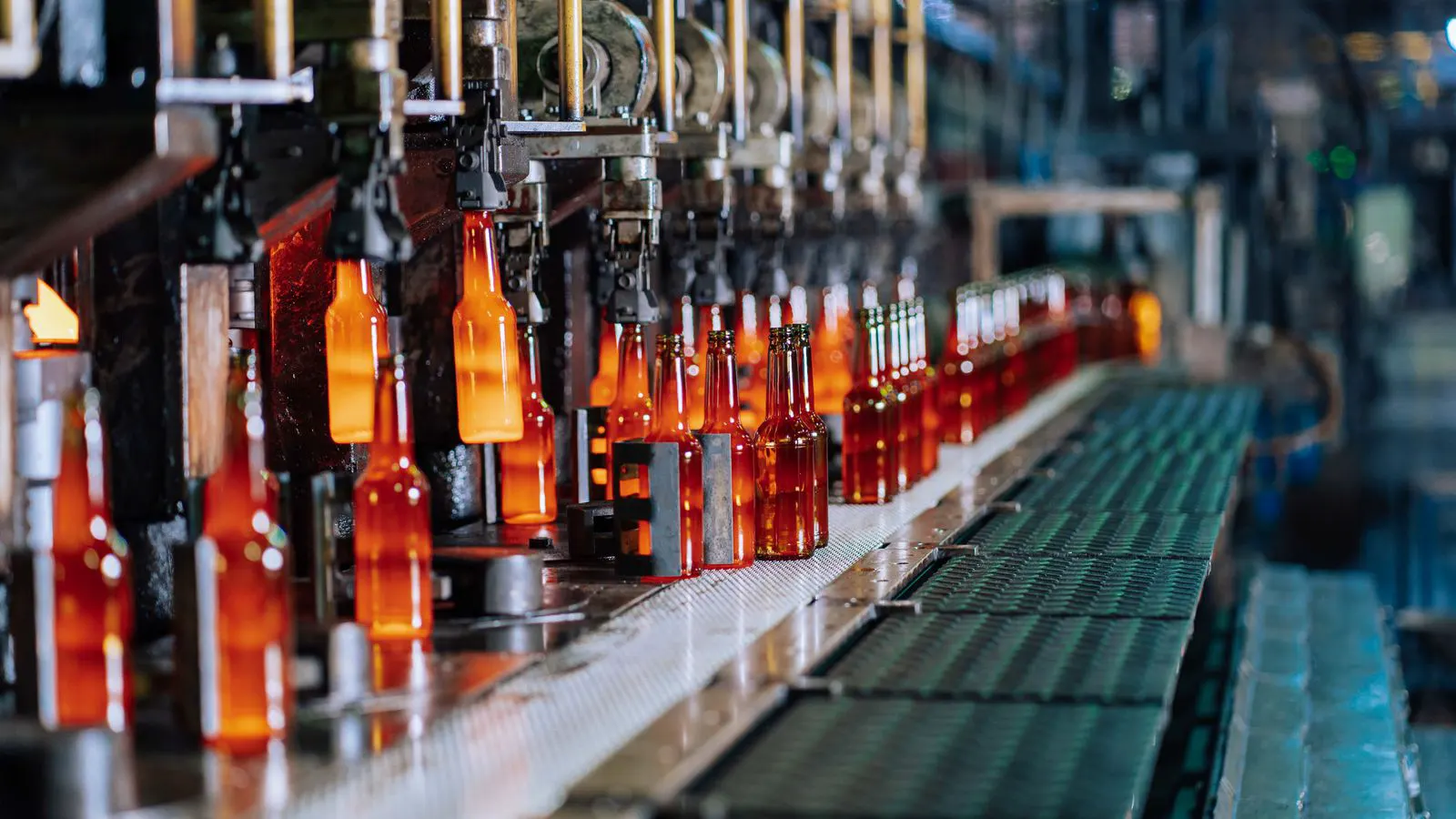
Glass manufacturing has a continuous cycle. A furnace runs for months at a time. When it needs cleaning or repair, production stops. The restart takes days. During this window, the factory must draw down inventory or accept order cuts. If the factory holds no buffer stock, delays hit buyers immediately.
Mold changes add another layer. A factory producing multiple bottle shapes must switch molds. Each change requires cleaning, alignment, and testing. If the schedule is tight, one change can push the next run back.
A worked example makes this clear. A buyer orders 50,000 330 milliliter PET bottles. The supplier has one line dedicated to that size. The buyer also orders 20,000 750 milliliter bottles from the same supplier. The factory runs the 750 size for four days. Then it switches to the 330 size. The switch takes one day. The 330 order now starts later than the buyer expected. The buyer had not accounted for the mold change window. The delivery date moved.
This example shows a simple mechanism. The supplier had capacity, but the schedule did not fit the reality of changeovers. The buyer learned that capacity is not the same as availability.
A Quick Look at Regional Factors
The table below lists common regional factors and how they influence lead time variability. It is not a ranking. The effect depends on the specific route, supplier, and product.
| Regional Factor | How It Affects Lead Time | Typical Buyer Response |
|---|---|---|
| Port congestion | Finished goods wait for loading slots. Delivery dates shift by days or weeks. | Build buffer stock or use multiple ports. |
| Weather patterns | Snow, floods, or heat stop trucking and rail. Schedules break during season peaks. | Shift critical orders to off-peak months. |
| Shared infrastructure | Multiple factories use the same furnace or packaging line. One failure hits several suppliers. | Source from different infrastructure pools. |
| Labor availability | Seasonal hiring gaps slow filling and packaging lines. Output drops below plan. | Negotiate flexible delivery windows. |
| Regulatory checkpoints | Border inspections or customs holds add unpredictable time. | Pre-clear documents and use bonded warehouses. |
How Sourcing Decisions Change With Region
The region where you buy changes the risk profile of your supply chain. Buying from a nearby supplier reduces transport time and exposure to border issues. But it may mean fewer alternatives if a local failure occurs.
Buying from a distant region can lower unit cost or improve access to specialized glass. The trade-off is longer lead time and more variability. The buyer must price that risk into the total cost.
A practical approach is to map the delivery chain. Identify every handoff point. Note which points are controlled by the supplier and which are controlled by third parties. The supplier can often influence factory output and packaging. They may have less control over ocean freight or local trucking.
If a handoff point is a known weak link, the buyer can adjust the order. Splitting a large order into smaller, more frequent shipments can reduce the impact of a single delay. It may raise handling costs, but it lowers the chance of a stockout.
Managing Lead Time Variability in Practice
Buyers can reduce the impact of lead time variability through several tactics. First, align the review cycle with the region. If you source from a region with long ocean freight, a weekly review is too short. A biweekly or monthly review fits better.
Second, define delivery windows instead of single dates. A promise of “arrival between the 10th and the 15th” is more useful than “arrival on the 12th.” It reflects reality and gives both sides room to adjust.
Third, track the actual variance. Record the promised date and the actual date for each order. Over time, the pattern becomes visible. You may find that delays cluster in certain months or certain routes. That data supports better planning.
Finally, build relationships with the logistics team, not just the sales team. The sales representative may promise a date. The logistics coordinator knows when the truck leaves and when the port is backed up. Keeping that channel open reduces surprises.
What to Ask a Supplier About Regional Risks
When evaluating a supplier, ask direct questions about their regional constraints. How many factories share the same furnace or packaging line? What happens when a shared resource is down? How do they handle port congestion or weather events?
Ask about their buffer policy. Do they hold finished goods in a regional warehouse? Do they hold raw glass stock? Buffer stock absorbs small shocks. Without it, every minor issue becomes a delivery miss.
Ask about their communication protocol. If a delay is likely, when do they tell you? A supplier who gives notice two days before delivery is easier to manage than one who tells you the morning of.
These questions are not about assigning blame. They are about understanding the system. Once you know the structure, you can design orders that fit it.
A Final Note on Expectations
Lead time variability is a normal part of global container supply. No region eliminates it. The goal is not zero variance. The goal is predictable variance. You want to know when things will slip, why they will slip, and how to adjust.
Buyers who treat delivery dates as fixed promises struggle. Buyers who treat them as moving targets within a defined window adapt more easily. The region sets the baseline. Your planning determines the outcome.
Frequently asked questions
Does a shorter distance always mean a more reliable delivery date?
Not always. A nearby supplier may use a congested local trucking route. A farther supplier may have a direct rail line. Distance is one factor, but the specific logistics path matters more.
How can I tell if a supplier's production delays are structural or temporary?
Ask about shared resources, maintenance schedules, and inventory buffers. If delays recur during furnace cleaning or mold changes, the issue is structural. If they appear only during peak demand, the issue may be temporary capacity strain.
Should I source from multiple regions to reduce risk?
Multiple regions can reduce single-point failure risk. But they also increase coordination complexity. Start with one region and add another only when the first region shows repeated variance or when your volume justifies the added management load.
What documents help me verify supplier logistics claims?
Request a detailed delivery route map, port or rail terminal names, and typical transit times. Ask for a sample packing list that shows how containers are grouped for transport. These documents reveal the actual chain of custody.
Can I negotiate better lead time terms with a supplier in a high-variability region?
Yes, but the terms may differ from standard agreements. You can negotiate flexible delivery windows, penalty-free rescheduling within a defined range, or priority allocation during peak seasons. The goal is to align the contract with the region's reality.